
If you’ve noticed your child squinting at the board in school or holding their phone closer to their face, you might be dealing with myopia. More kids are becoming nearsighted than ever before, which has parents everywhere asking the same question: What can we do about it?
The good news is that today we have options beyond basic glasses. Contact lenses designed for myopia control can be an effective way to manage myopia and slow its progression in children and teens.
Myopia & Its Growing Prevalence
Myopia, or nearsightedness, happens when your eye grows a bit too long from front to back. This makes distant objects look blurry while close-up objects remain clear. Think of it as your eye’s natural camera lens being focused too close.
Myopia rates have been climbing steadily over the past few decades. What used to affect a smaller portion of the population is now incredibly common, especially among school-age children. Some experts point to increased screen time and less outdoor activity as contributing factors, though genetics still plays a significant role.
The tricky part about myopia is that it typically develops during childhood and tends to worsen as kids grow. That’s why catching it early and taking action matters so much.
Importance of Myopia Control
You might wonder why we can’t just update prescription glasses every year or 2 as vision changes. While that approach works for vision correction, it doesn’t address the underlying progression of myopia.
Higher degrees of myopia aren’t just about wearing thicker glasses. High myopia can increase the risk of severe eye conditions later in life, including retinal detachment, glaucoma, and early onset cataracts. Think of myopia control as an investment in your child’s long-term eye health.
While myopia can’t be cured, we can substantially slow it down. And even reducing the rate of progression by a modest amount can make a meaningful difference to your child’s vision.
Types of Myopia Control Contact Lenses
There are a few options for myopia control lenses.
Orthokeratology (Ortho-K) Lenses (BEST)
Ortho-k lenses are rigid lenses that are worn overnight while your child sleeps. They gently reshape the cornea’s surface, providing clear vision during the day without any lenses at all. It’s pretty amazing—your child pops them in before bed and wakes up with clear vision that lasts all day.
The concept behind orthokeratology is simple: we gently flatten the central corneal zone to correct myopia and improve their vision, while steepening the mid-peripheral cornea creates a treatment zone that helps slow the progression of myopia.
Soft Multifocal Contact Lenses (GOOD)
Multifocal contact lenses are available in daily or monthly soft lenses and have different zones for distance and near vision, similar to progressive glasses. The unique design helps control how light focuses in the peripheral retina while maintaining comfortable all-day wear. They are also a good option for correcting your myopia while helping to slow its progression.
Specialty Dual-Focus Lenses (BEST)
Newer contact lens designs feature concentric rings or other patterns that alternate between distance correction and peripheral defocus zones. These lenses provide the benefits of myopia control in a comfortable, soft lens format. Because they have been specifically engineered to address myopia progression, they provide a highly effective option for both correcting myopia and managing its progression.
Traditional Contact Lenses
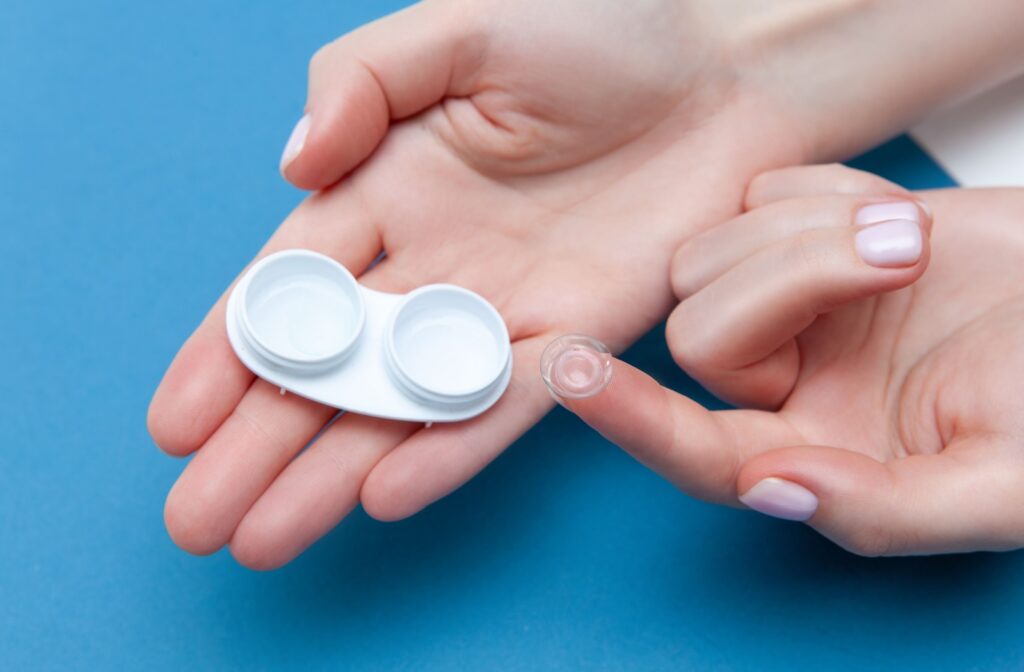
There are many varieties of contact lenses, ranging from soft to semi-rigid to hard, that can correct nearsighted vision. As an adult, most people’s eye growth stops, and their vision doesn’t get worse. But it still requires correction for clear vision. This is where these various contact lenses provide an excellent alternative to wearing eyeglasses.
Benefits of Myopia Control Contact Lenses
The most obvious advantage of these lenses is their ability to slow the progression of myopia. However, there are other benefits! Many kids love the freedom that contacts provide—no foggy glasses during hockey practice or sliding frames during dance class.
Contact lenses can boost confidence, especially for teens who feel self-conscious about glasses. They also provide better peripheral vision and don’t get smudged or broken like glasses can.
Contacts also eliminate the worry about broken frames for active kids during sports or outdoor adventures. Plus, they work great with protective eyewear like swimming goggles or safety glasses.
Who Is a Good Candidate for Myopia Control Lenses?
Age plays a significant role in candidacy. Most myopia control contacts work best when started between the ages of 8 and 12, though individual circumstances vary. The key is beginning treatment while the eyes are still actively growing.
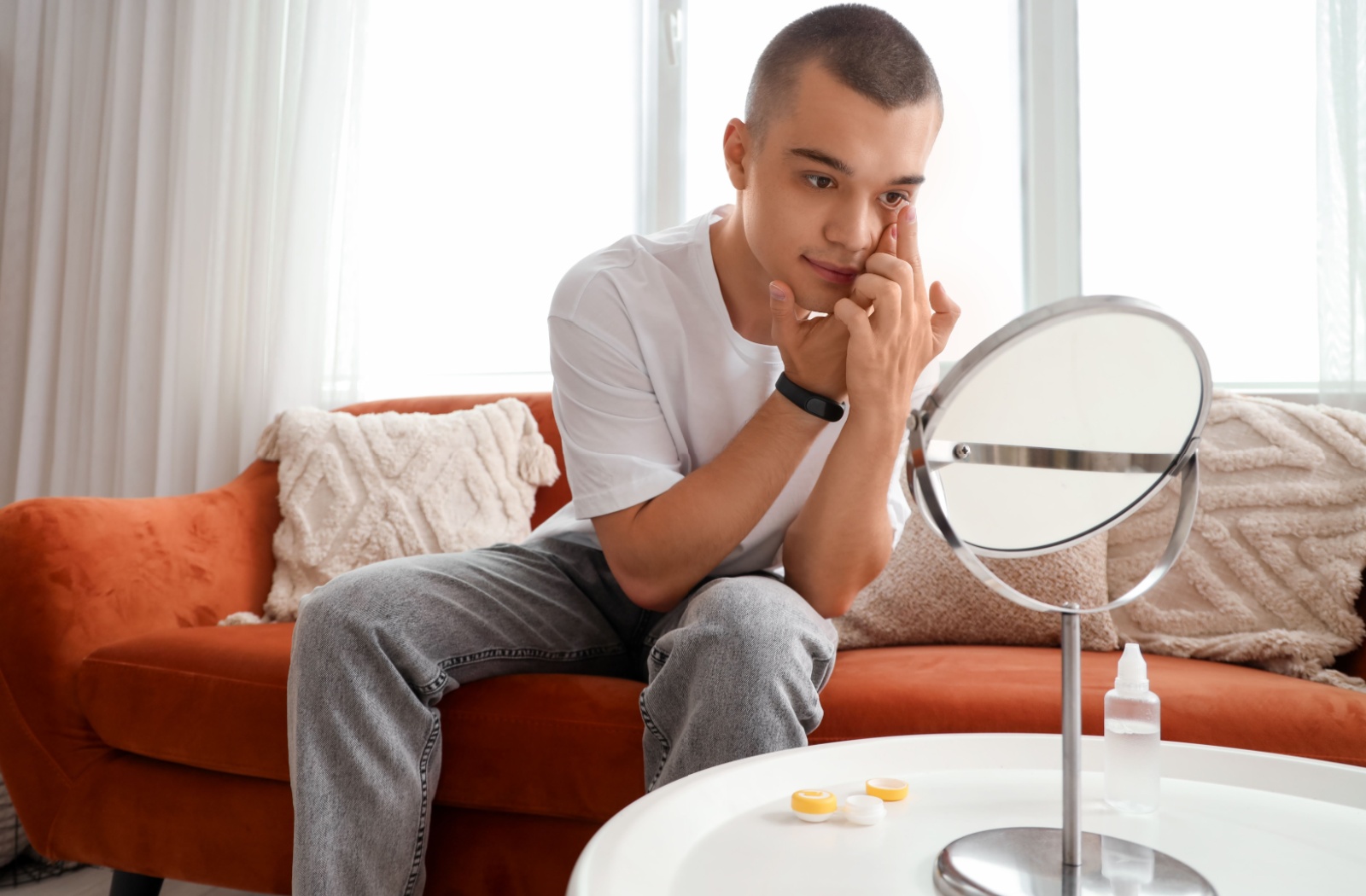
Maturity level matters too, especially for daily lens wear. Kids need to be responsible enough to handle proper insertion, removal, and lens care. Most children adapt to contact lenses surprisingly well with proper guidance and practice.
Good candidates typically have progressive myopia rather than stable prescriptions. If your child’s prescription has been changing regularly, they might benefit from myopia control measures.
Other Myopia Control Methods
Contact lenses aren’t the only option for managing myopia progression. Several other approaches can be effective, sometimes used alone or in combination.
Specialty Eyeglasses
Peripheral defocus lenses (Essilor®Stellest®) or lenses incorporating Diffusion Optics Technology (CooperVision®MiSight®) can help with myopia control. Peripheral defocus glasses such as Stellest® work similarly to myopia control contacts, using different zones to influence how light hits the retina.
MiSight® glasses, on the other hand, reduce retinal contrast to slow myopia progression. Because they use a different mechanism of action, they can be easily combined with contact lens therapy if your child’s axial length continues to increase despite the use of myopia-control contact lenses.
Atropine Eye Drops
Low-dose atropine drops have shown strong results in slowing myopia progression. These prescription drops are typically used once daily and have a good safety profile. The main side effects include a slight increase in light sensitivity and a reduction in near focusing ability. The concentration can be adjusted if side effects occur.
Atropine eye drops, although effective for myopia control, do not correct myopia. Therefore, they must be used in combination with another form of refractive correction.
Your Partner in Myopia Control
Managing myopia feels less overwhelming when you have the right team supporting you. We believe in taking a comprehensive approach that considers your child’s lifestyle, maturity level, and specific vision needs.
We’ll work with you to determine the best myopia control strategy for your family. Whether that involves specialty contact lenses, atropine therapy, or a combination approach, we’re here to guide you through the process step by step. We have a biometer that allows us to specifically monitor axial length – the growth of your child’s eye – which helps us set appropriate treatment targets.
Our team takes time to ensure both kids and parents feel comfortable with whichever treatment plan we choose together. We know that successful myopia control requires commitment from the whole family, and we’re here to support you along the way. Give us a call at Old South Optometry to schedule a comprehensive eye exam and discuss which approach might work best for your family.